
Countries
Study in United States
Visa & Immigration Service

Facts of United States
The United States of America is a federal constitutional republic with fifty states, one federal district, and 16 overseas territories (five of which are permanently inhabited). It is almost entirely located on the North American continent, and is the third largest country in the world in terms of landmass. Washington D.C. is the national capital, although New York is the largest city, and California is the most populous state. Due to its global influence, be it political, economic, military, or cultural, the U.S. is often considered the world’s foremost superpower.
American society is well known for its diversity. Americans come from a wealth of different racial, ethnic and cultural backgrounds. In addition, there are differences among the characteristics and customs of people from the North, South, East, West and Midwest, as well differences between those from big cities and rural areas. barbecues and informal get-togethers.

Education System
US higher education starts with under graduate courses – a variety of certificates and diplomas, a two year degree, known as an associate degree, and a four year degree known as a bachelor degree. It is possible (and often happens) that a student may study for an associate degree, and then study two more years to gain a bachelor (or baccalaureate) degree – usually a bachelor degree will be awa.
Undergraduate education (and some masters degrees) are based on an accumulation of courses (units of study) which are assigned a number of credits. A student is awarded credits for the courses they take, and the degree is complete when the student has a certain level of credits. This means that although most bachelor degrees take four years, it is possible to take a degree over a longer period, maybe part time or with some time away from study.
Graduate (known in some countries as post graduate) degrees include masters degrees, taking two years at a University. These are often termed advanced professional degrees, as they tend to be aimed at specific professions and are career-advancing degrees in subjects such as medicine, law and management e.g. Master in Business Administration (MBA). Doctorates (PhDs) are usually four years, and are research based.
University
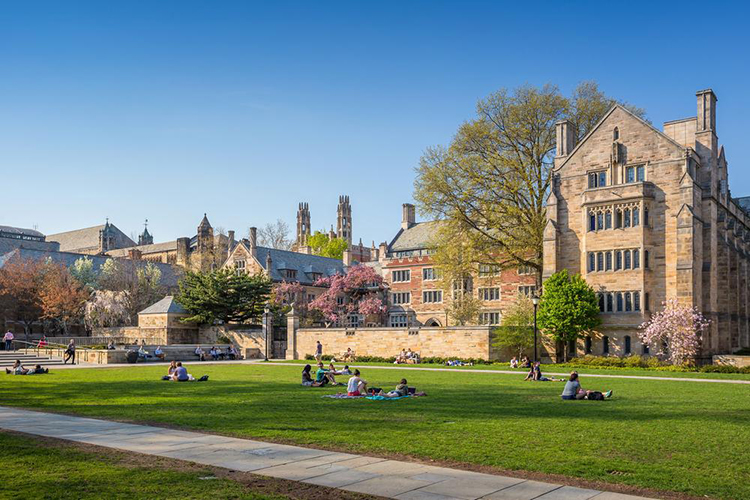
Universities offer a wide range of choice in programs as well as subjects. Large Universities like, Harvard and Princeton, are composed of several colleges. Depending upon his interest, a student can choose the college. Each college has the flexibility to set its own standard for admission.
Another important aspect to note in case of these institutes is that they can be both private as well as public. Though most of the institutions receive financial support from the federal and state governments, public institutes rely heavily on public funds. On the other hand the private institutions though compete for state funds, depend more on tuition fees and contributions from foundations and private citizens.
Some of the better-known private universities are Harvard, Princeton, Yale and Stanford. University of Michigan, State University of New York System (SUNY), University of Illinois, University of Washington are some of the public universities.